
A Beginner's Guide to the Night Sky
How to enjoy stargazing without a telescope, and what to look for over the next few months.
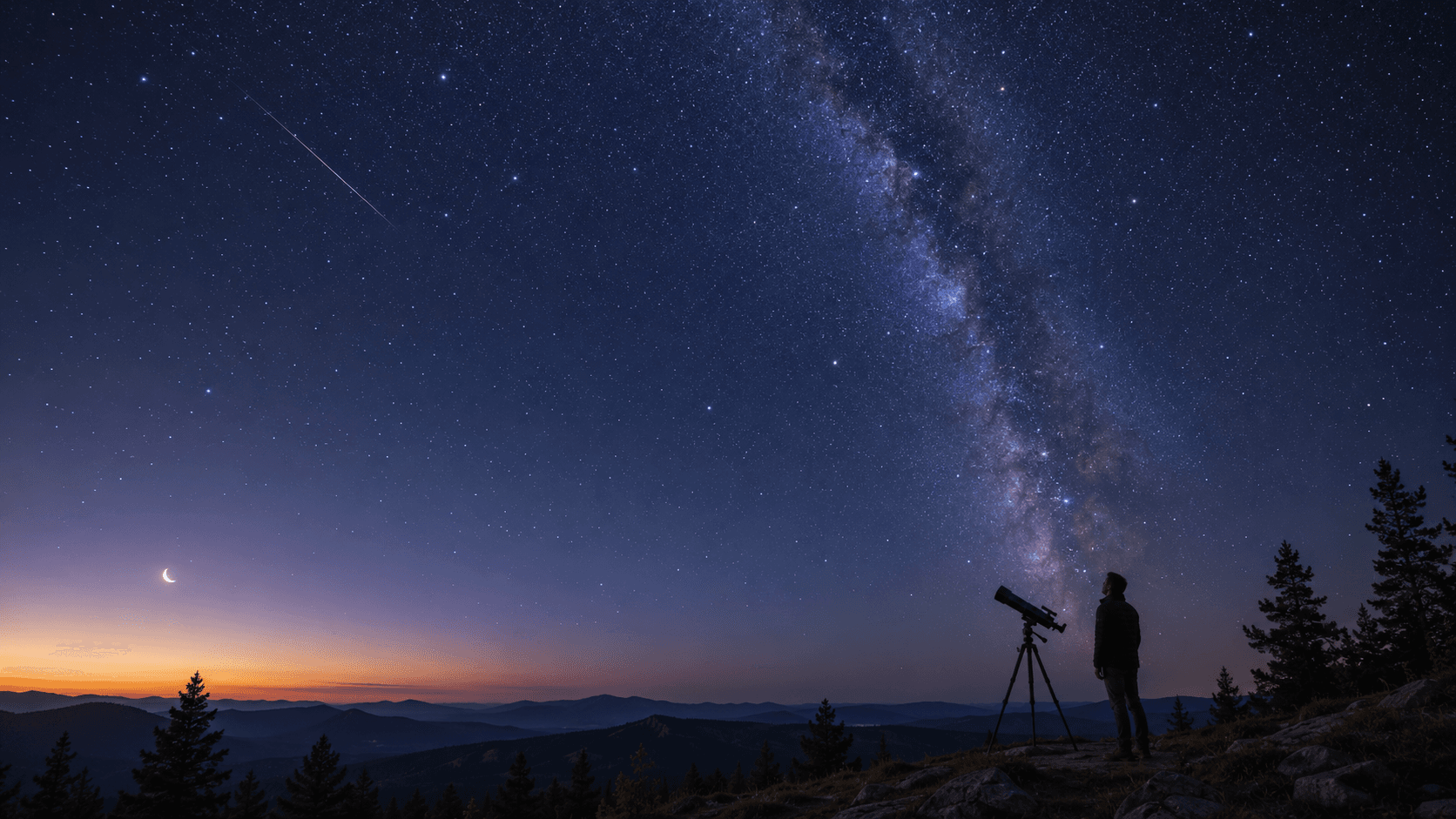
You don't need expensive gear to start enjoying the night sky. A dark spot, patience, and a rough idea of where to look are enough for a rewarding evening.
Let your eyes adjust
It takes about twenty minutes for your eyes to fully adapt to darkness. Avoid looking at bright phone screens during that time — use red-light modes if you must.
Learn a few landmarks
Start by identifying one or two bright constellations from your area. In the northern hemisphere, the Big Dipper and Orion are helpful starting points. From there you can find the pole star and other constellations by tracing lines between the stars you already know.
Watch the planets
Bright planets are often more visible than the brightest stars. Use the Tonight's Sky tool on this site to see which planets are above the horizon and where.
Track the Moon
The Moon's phase changes over roughly a month. Watching it move against the background of stars from night to night is one of the easiest and most enjoyable astronomy activities you can do.
Look for events
Meteor showers, lunar eclipses, and close alignments of planets happen a few times a year. A quick search for the current year's events will help you plan a memorable night out under the stars.
Sources
- Stellarium — last verified 2026-01-15