
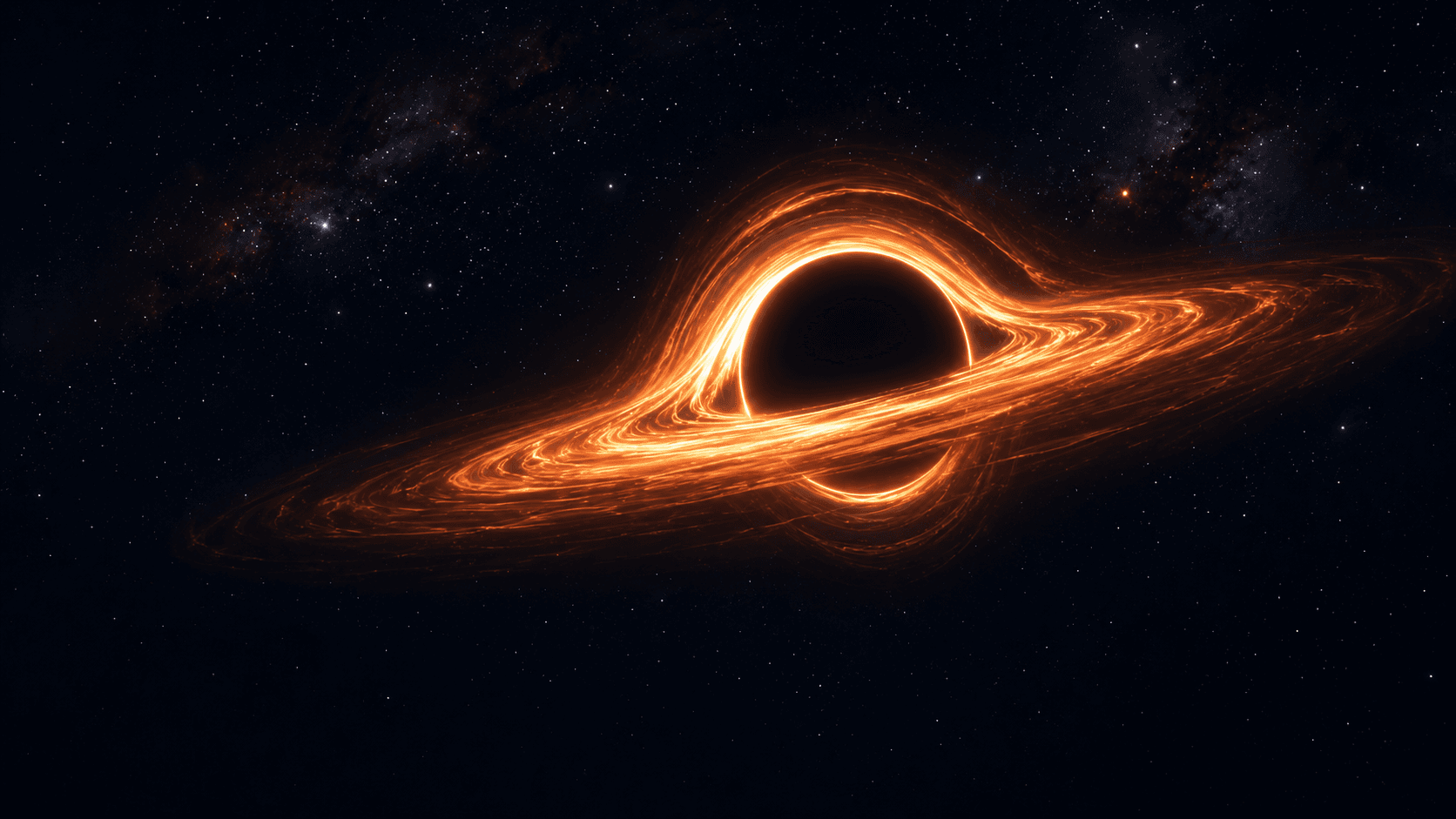
Black Holes
Regions of spacetime where gravity is so strong that nothing — not even light — can escape.
Overview
Black holes form when matter collapses to an extremely dense state. Their influence on their surroundings, from stars and gas to the evolution of galaxies, is immense.
Anatomy of a Black Hole
Hover or tap a marker to learn more.
Event Horizon
The boundary beyond which nothing can escape.
Accretion Disk
Superheated gas and dust orbit the black hole.
Singularity
The core, where matter is crushed to infinite density.
Types of Black Holes
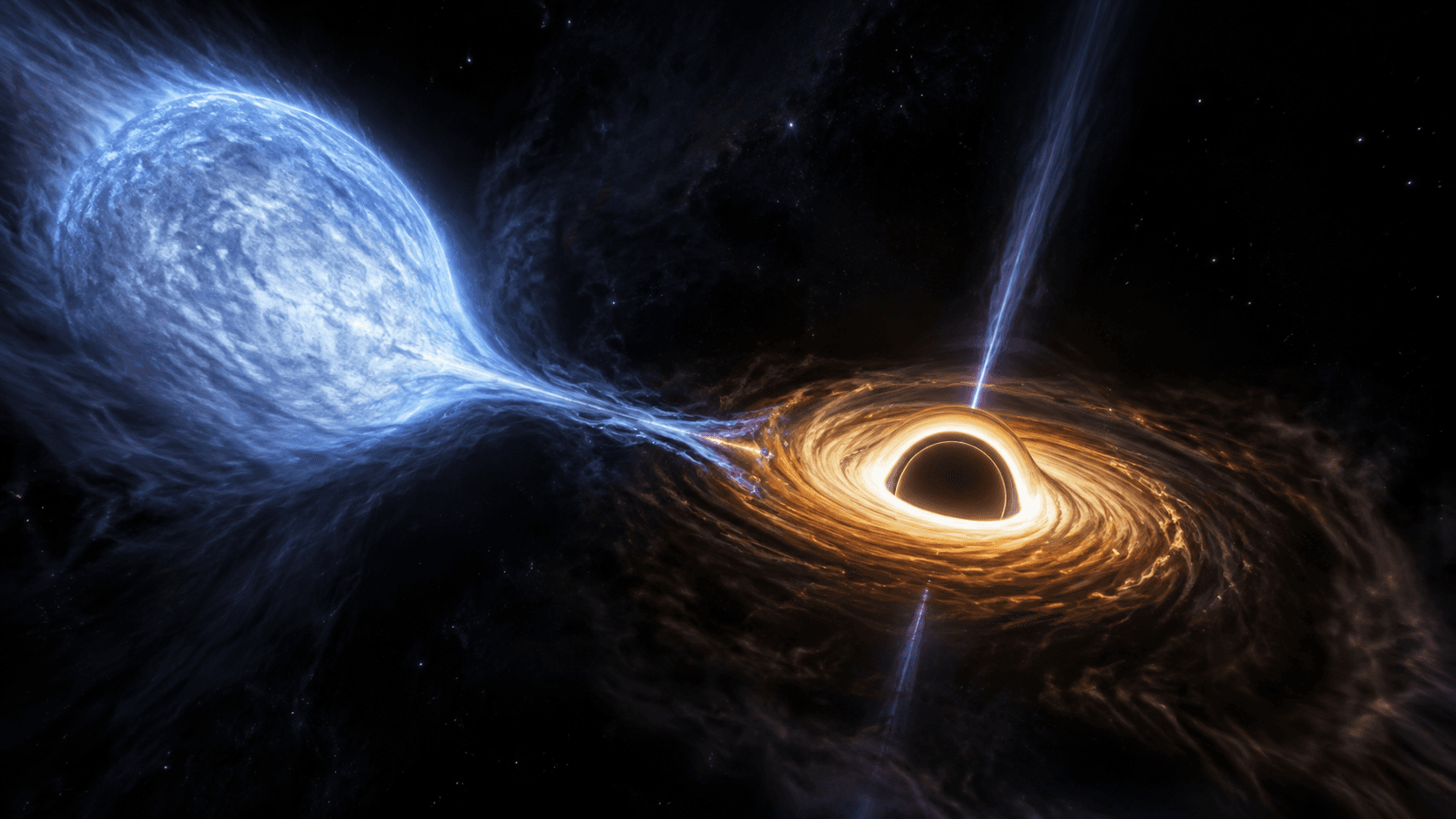
Stellar-Mass
Formed from collapsed stars. Typically a few times the mass of the Sun.
Read guide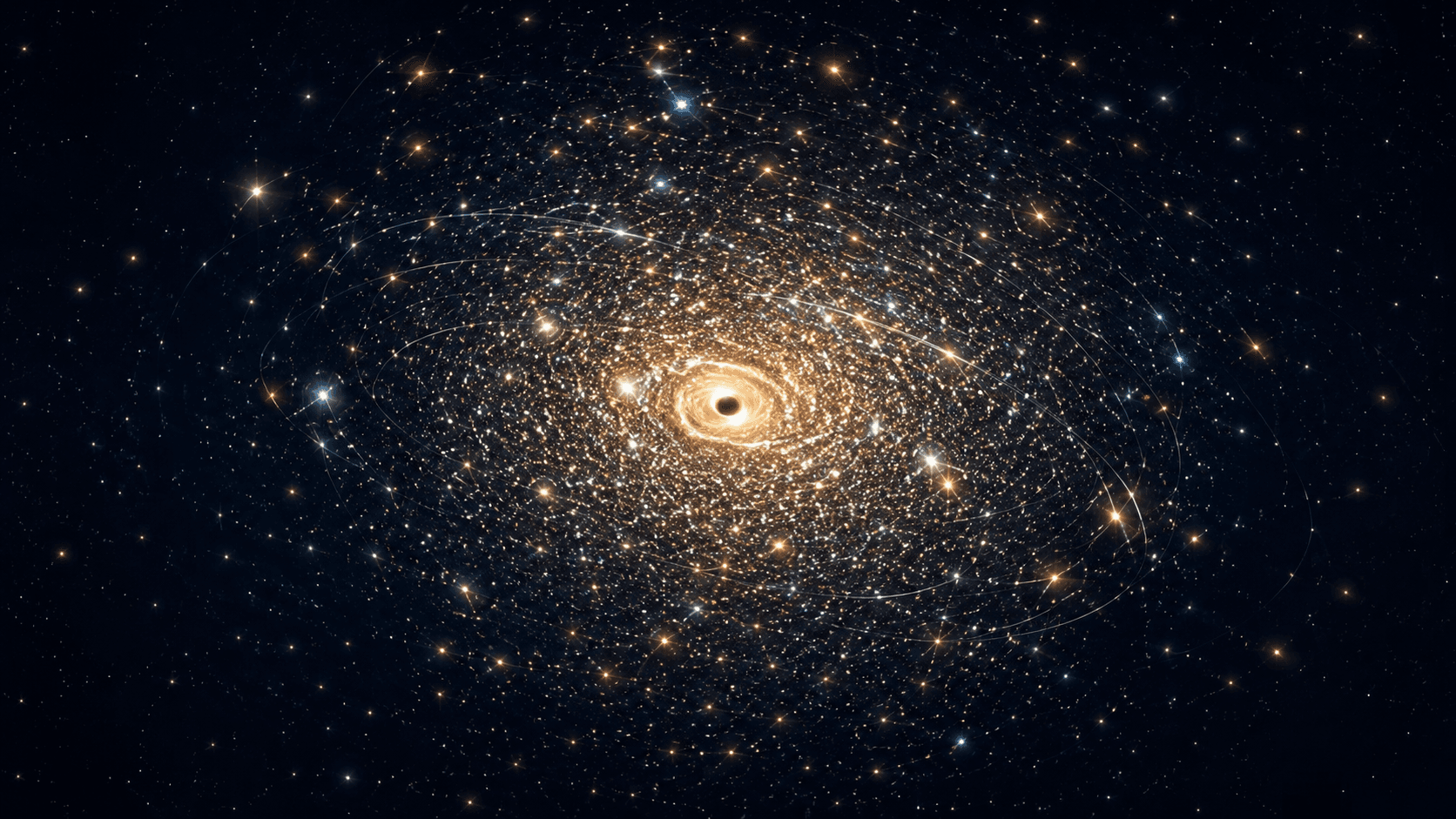
Intermediate-Mass
Hypothetical black holes with masses between stellar and supermassive black holes.
Read guide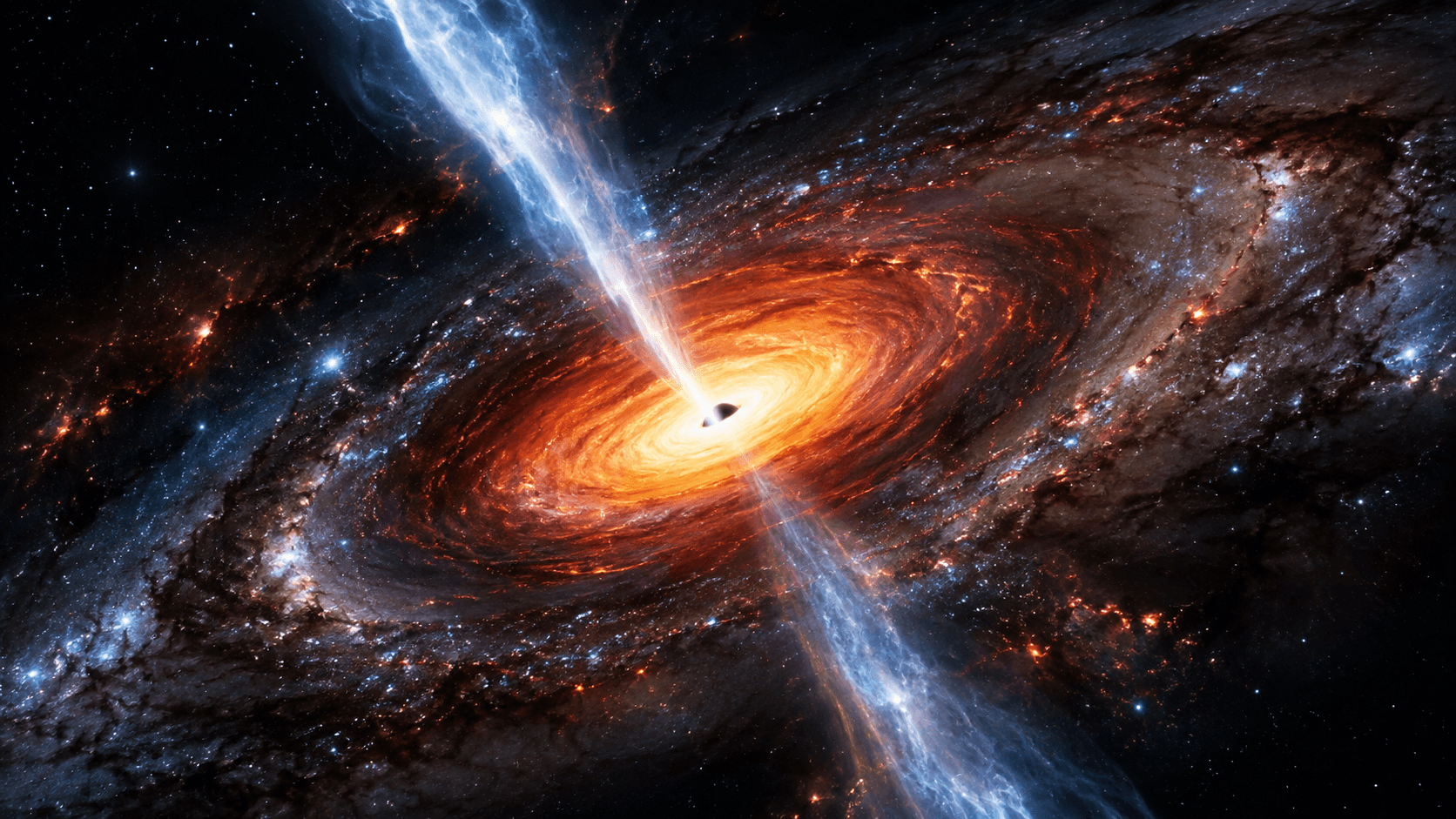
Supermassive
Millions to billions of solar masses, found at the centers of galaxies.
Read guide
Primordial (Hypothetical)
Could have formed in the early Universe moments after the Big Bang.
Read guide
Key Facts
Black holes are invisible, but their effects can be measured.
They can warp spacetime and bend light.
Time slows down near a black hole (the stronger the gravity, the slower time).
Black holes evaporate over incredibly long timescales via Hawking radiation.
Featured Discoveries
- 2019
First image of a black hole (M87*).
- 2022
Black hole at the center of our galaxy (Sgr A*) imaged.
- 2015
Gravitational waves from black hole merger detected.
- 2021
Farthest quasar powered by a black hole observed.
Explore Further
Dive deeper into black hole science, simulations, and the latest research.
Physics inside the event horizon is not fully understood. Any statement about the singularity involves scientific uncertainty. Learn more in our articles.